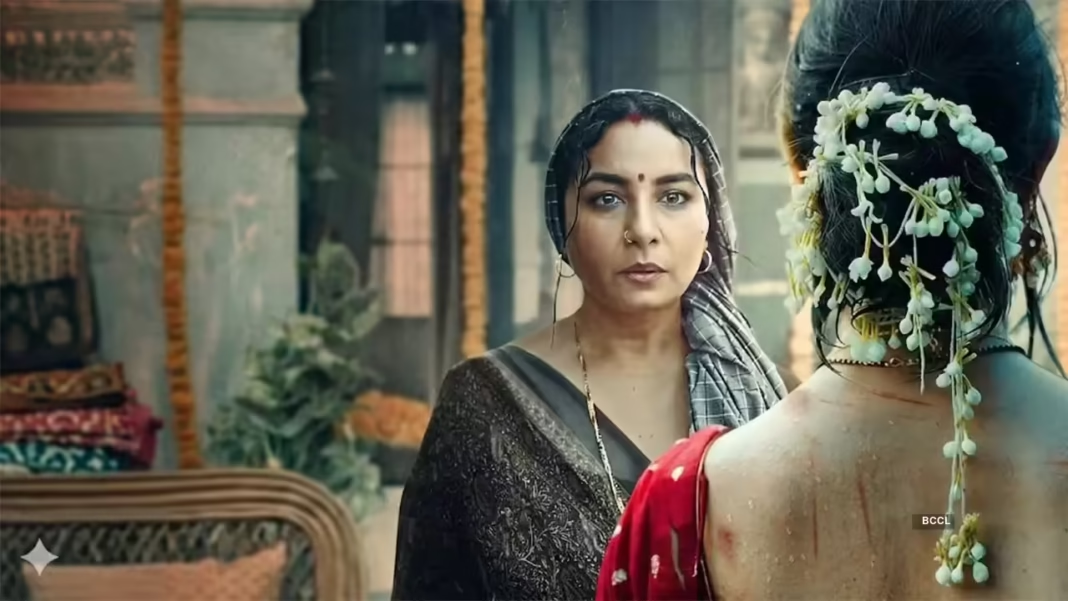




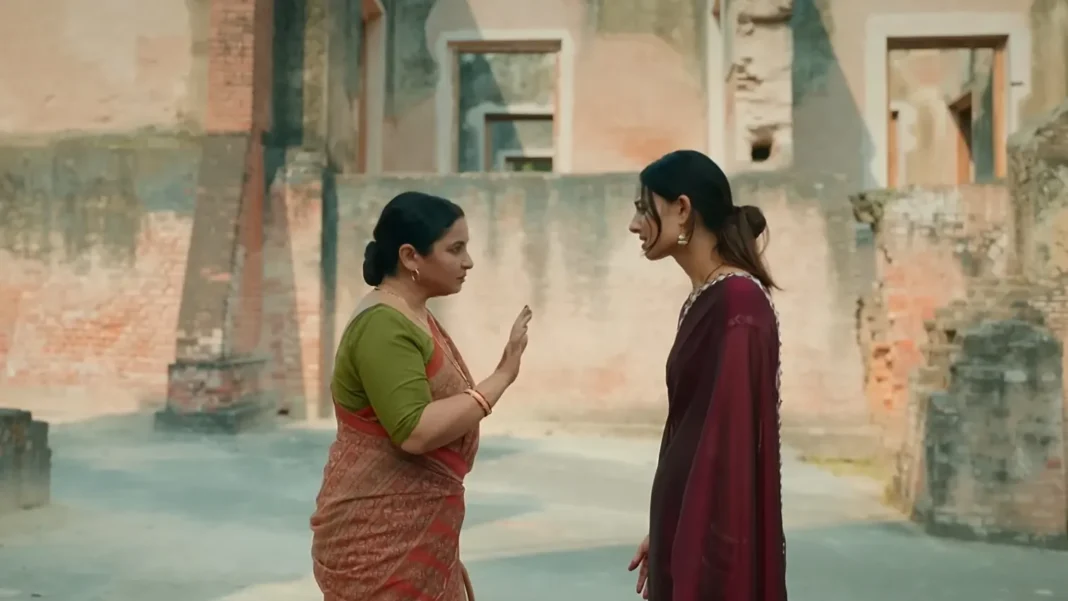
Divya Dutta and Sanjay Mishra Star in Six-Episode Drama on Marital Rape
Chiraiya Review: A Bold Idea Undermined by Execution
There’s a strain of Hindi social dramas that complicate simple themes. They try so hard to deliver a progressive message that it often feels overconfident. The storytelling can seem like a Zoom lecture with optional attendance. Chiraiya exemplifies this. Its intentions are strong, but its execution undermines them.
Story and Premise
The six-episode series follows Kamlesh (Divya Dutta), a traditional Indian woman, whose younger sister-in-law becomes a victim of marital rape. Kamlesh belongs to a forward-thinking household but remains steeped in regressive beliefs about women and domesticity. Her father-in-law (Sanjay Mishra) is a celebrated author who hides his chauvinism behind poetry. Her husband (Faisal Rashid) is gentle but passive. He notices right from wrong but avoids confrontation with his father and brother.
Kamlesh unknowingly shapes her brother-in-law Arun (Siddharth Shaw) into a problematic figure. When she realizes her complicity, both women understand that dismantling patriarchy takes time. Their dissent is small and everyday—like cooking a dish of their choice—instead of dramatic rebellion.
Social Commentary and Themes
The series critiques self-proclaimed liberals. Kamlesh’s father-in-law often apologizes superficially, masking the trauma caused by sexual abuse. Her husband accepts his role as a “supportive” figure but refuses to challenge toxic masculinity directly. Chiraiya highlights that meaningful change often happens quietly, not through grand gestures.
Characters: Strengths and Weaknesses
Chiraiya struggles with character design. Kamlesh comes across as a caricature rather than a human. Her mispronunciations, rigid beliefs, and comic misunderstandings make her a concept rather than a person. Meanwhile, Pooja embodies a Gen-Z stereotype who seems implausible in a joint family setting. Divya Dutta delivers a strong performance, but the script flattens her character. Prasanna Bisht’s Pooja becomes secondary in her own story.
Arun behaves like a 90s villain, adding a dated TV-soap feel. The grandmother only speaks when convenient for the plot, and the series delivers predictable family tropes. These choices make the show feel artificial and sometimes patronizing.
Execution and Finale
The finale feels rushed. The series ends with a slate of statistics and a slow-motion walk after an unconvincing speech. This weak conclusion undermines the powerful themes explored throughout the show.
Final Verdict
Chiraiya mistakes style for substance. Its ideology is intact, but its execution falters. The series aspires to make bold statements but ultimately delivers a frustrating mix of outdated tropes and superficial social commentary. It could have been transformative, but it ends up revealing its wings of clay.